
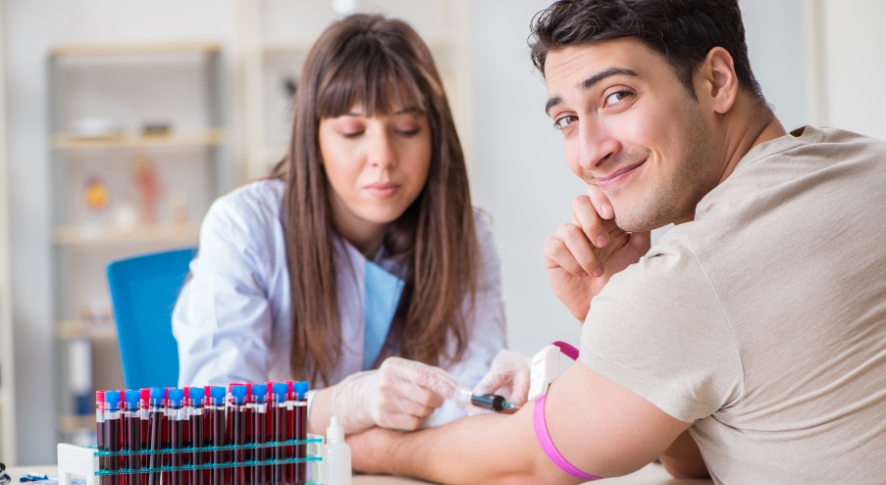
If you’re experiencing unexplained hair shedding, the answer might be hiding in your blood. Iron deficiency is one of the most common and most treatable, causes of hair loss, yet it often goes undiagnosed because standard blood tests may miss the early signs.
Here’s what makes this particularly frustrating: you can have “normal” iron levels according to standard tests and still not have enough iron for healthy hair growth. Your body prioritises essential functions like making red blood cells long before it worries about your hair. By the time your doctor tells you your iron is “fine,” your follicles may already be struggling.
In this guide, we explain exactly how iron affects your hair, what blood tests actually reveal, and why the ferritin level that’s “normal” for preventing anaemia may not be optimal for your hair.
How Iron Affects Hair Growth
Iron plays a crucial role in your body’s ability to grow and maintain healthy hair. Understanding this connection helps explain why even mild iron deficiency can trigger noticeable hair loss.
The Oxygen Connection
Iron is essential for producing haemoglobin — the protein in red blood cells that carries oxygen throughout your body. Your hair follicles are among the fastest-dividing cells you have, with cells in the hair bulb dividing every 23 to 72 hours. This rapid growth requires a constant, rich supply of oxygen.
When iron levels drop, your body produces fewer healthy red blood cells, meaning less oxygen reaches your scalp. Hair follicles, which the body considers non-essential compared to vital organs, are among the first to suffer.
The Ferritin Factor
Your body stores iron in a protein called ferritin. Think of ferritin as your “iron bank” — it holds reserves that your body draws upon when needed. Hair follicles contain ferritin stores, and when your body runs low on iron, it “borrows” from these stores first.
This is why hair loss can begin before other iron deficiency symptoms appear. Your follicles lose their iron reserves while the rest of your body still functions normally.
Cell Division and DNA Synthesis
Iron is also necessary for DNA synthesis — the process by which cells replicate. Since hair growth depends on rapid cell division in the follicle, insufficient iron can directly slow or disrupt the hair growth cycle.
The Research: What Studies Actually Show
The relationship between iron and hair loss has been extensively studied, though results have sometimes been mixed. Here’s what the current evidence tells us:
Strong Associations Found
Multiple studies have found significantly lower ferritin levels in people with hair loss:
- A meta-analysis of over 10,000 participants found that women with non-scarring alopecia had ferritin levels approximately 18.5 ng/dL lower than healthy women
- One case-control study found that women with ferritin levels at or below 30 ng/mL had 21 times higher odds of experiencing telogen effluvium (diffuse hair shedding)
- Research shows 65% of women with diffuse hair loss were in an iron-deficient state, with another 20% in an iron-depleted state
- A study of primary care patients with alopecia found iron deficiency in 25-28% of women tested
The Female Pattern
Iron deficiency-related hair loss predominantly affects women:
- Decreased ferritin levels are significantly associated with diffuse and patterned hair loss, especially in premenopausal women
- Women of menstruating age face the highest risk due to monthly blood loss
- Pregnancy increases iron demands, often depleting stores
- The association is less clear in men and postmenopausal women
Why Some Studies Disagree
Not all research has found a clear link, and this matters. The discrepancy often comes down to one crucial factor: what ferritin level is considered “normal.”
Studies using a cutoff of 10-15 ng/mL (the traditional “normal” threshold) often find no association. But studies using higher cutoffs of 40-70 ng/mL frequently find significant relationships. This suggests that the level of iron needed for healthy hair is substantially higher than the level needed simply to prevent anaemia.
Iron Deficiency in the UK: The Hidden Problem
Iron deficiency is far more common than most people realise, particularly among women:
The Statistics
- Almost 1 in 3 UK women (31.6%) show signs of absolute iron deficiency
- Among women aged 18-49, prevalence exceeds 35%
- Nearly 1 in 10 UK women (9.9%) have anaemia
- According to NICE, iron deficiency anaemia affects approximately 3% of men and 8% of women in the UK
- The National Diet and Nutrition Survey found 54% of UK girls and 27% of women have iron intakes below recommended levels
A Hidden Epidemic
What’s particularly concerning is that these figures come from studies of health-conscious individuals seeking private health checks. The true rates in the general population — particularly in economically disadvantaged communities — may be even higher.
Even more striking: 52% of people with iron deficiency reported no symptoms. This means millions of people are walking around with suboptimal iron levels without knowing it — and their hair may be suffering as a result.
What Blood Tests Reveal
If you suspect iron deficiency is affecting your hair, blood testing is essential. But understanding what these tests measure — and what the results actually mean for your hair; is crucial.
The Key Tests
Serum Ferritin This is the single most important test for assessing iron stores relevant to hair health. Ferritin measures how much iron is stored in your body, rather than how much is currently circulating. Low ferritin is a highly specific and sensitive marker for iron deficiency.
Haemoglobin (Hb) Part of a full blood count, haemoglobin measures the oxygen-carrying protein in your red blood cells. Low haemoglobin indicates anaemia, but normal haemoglobin doesn’t rule out iron deficiency — you can have depleted iron stores while still maintaining normal haemoglobin levels.
Serum Iron This measures the iron currently circulating in your blood. It fluctuates throughout the day and with meals, making it less reliable as a standalone test.
Total Iron-Binding Capacity (TIBC) This measures your blood’s capacity to bind iron with transferrin (the protein that transports iron). TIBC is often elevated when iron stores are low, as your body increases its capacity to capture any available iron.
Transferrin Saturation This calculation shows what percentage of your iron-binding capacity is actually being used. Low transferrin saturation suggests iron deficiency.
The Ferritin Levels You Need to Know
Here’s where it gets important for your hair. Standard laboratory reference ranges typically list “normal” ferritin as:
- Women: 20-200 ng/mL (varies by lab)
- Men: 20-500 ng/mL (varies by lab)
But these ranges are designed to diagnose iron deficiency anaemia — not to identify optimal levels for hair growth. Research suggests the ferritin levels needed for healthy hair are substantially higher:
| Ferritin Level | What It Means for Hair |
|---|---|
| Below 10-15 ng/mL | Iron deficiency confirmed; high risk of hair loss |
| 15-30 ng/mL | “Normal” by some lab standards but associated with 21x higher risk of hair shedding |
| 30-40 ng/mL | Suboptimal for hair; many experts recommend supplementation |
| 40-70 ng/mL | Optimal range for hair growth; this is where studies show best outcomes |
| Above 70 ng/mL | Good iron stores; hair loss unlikely to be iron-related |
Key insight: Using a ferritin cutoff of 10-15 ng/mL only identifies iron deficiency with 59% sensitivity. Using a cutoff of 41 ng/mL improves sensitivity to 98% while maintaining 98% specificity.
One landmark study found that optimal hair growth occurred when ferritin was at least 70 ng/mL, with corresponding haemoglobin of 13.0 g/dL or higher. The researchers recommended redefining “normal” ferritin as 60 ng/mL or above for detecting iron deficiency-related hair loss.
The Gap Between “Normal” and “Optimal”
This is the crucial point many doctors miss: your ferritin can be “within normal limits” while still being too low for healthy hair.
Consider this comparison:
- Ferritin level that corresponds to anaemia diagnosis (Hb 12.0 g/dL): approximately 5.1 ng/mL
- Ferritin level needed for optimal hair growth: 40-70 ng/mL
That’s a massive gap. You could have ferritin of 20 ng/mL — technically “normal” — and still have insufficient iron stores for your hair follicles to function properly.
This is why getting the right tests, and interpreting them correctly, matters so much.
Signs Your Hair Loss May Be Iron-Related
Iron deficiency-related hair loss typically presents in specific ways:
Hair Loss Patterns
- Diffuse shedding — Hair falls out evenly across the scalp rather than in patches or following a pattern
- Increased daily shedding — Noticing significantly more hair in your brush, shower drain, or on your pillow
- Overall thinning — Hair appears thinner and less dense, often with widening of the parting
- Slower hair growth — Hair seems to grow more slowly than it used to
- Changes in hair texture — Hair may become drier, more brittle, or lose its shine
Other Iron Deficiency Symptoms
Hair loss rarely occurs in isolation with iron deficiency. Watch for these accompanying symptoms:
Energy and Physical Signs:
- Persistent fatigue and weakness
- Breathlessness, especially during exercise
- Pale skin (check inside your lower eyelids)
- Cold hands and feet
- Dizziness or lightheadedness
- Heart palpitations
- Headaches
Other Signs:
- Brittle nails or spoon-shaped nails
- Restless legs syndrome
- Cravings for non-food items (ice, dirt, starch — known as pica)
- Sore or swollen tongue
- Difficulty concentrating
- Frequent infections
If you’re experiencing several of these symptoms alongside hair loss, iron deficiency becomes a strong possibility worth investigating.
Who Is at Risk?
Certain groups face significantly higher risk of iron deficiency:
Women of Menstruating Age
Heavy menstrual bleeding is one of the most common causes of iron deficiency in premenopausal women. Each period means iron loss, and without adequate dietary intake or supplementation, stores gradually deplete.
Pregnant and Breastfeeding Women
Pregnancy dramatically increases iron requirements to support the developing baby. Without supplementation, many women become deficient. Breastfeeding continues to place demands on iron stores.
Vegetarians and Vegans
While plant foods contain iron, it’s in a less absorbable form (non-heme iron) than the iron found in meat (heme iron). Without careful dietary planning, those following plant-based diets are at higher risk of deficiency.
People with Absorption Issues
Certain conditions impair iron absorption:
- Coeliac disease
- Inflammatory bowel disease (Crohn’s, ulcerative colitis)
- Previous gastric surgery or gastric bypass
- Regular use of proton pump inhibitors (PPIs) or antacids
- H. pylori infection
Frequent Blood Donors
Regular blood donation depletes iron stores. Without adequate replacement through diet or supplementation, donors can become deficient.
Endurance Athletes
Intense exercise can increase iron requirements and losses through sweating, gastrointestinal bleeding, and red blood cell breakdown.
Older Adults
Reduced stomach acid with age can impair iron absorption, and dietary intake may decrease.
Getting Tested: What to Expect
At Hair Loss Studios, we offer blood testing specifically designed to identify nutritional factors contributing to hair loss. Here’s what the process involves:
The Tests We Recommend
For a comprehensive assessment of iron-related hair loss, we typically include:
- Full blood count (FBC) — Measures haemoglobin, red blood cell count, and other markers
- Serum ferritin — The key indicator of iron stores
- Serum iron and TIBC — Additional context for iron status
- Vitamin B12 and folate — Often tested alongside iron, as deficiencies can coexist
- Vitamin D — Commonly low in the UK and associated with various hair conditions
- Thyroid function — Thyroid disorders frequently accompany iron issues and affect hair
Interpreting Your Results
When we review your results, we don’t just look for values within standard reference ranges. We assess whether your levels are optimal for hair health, considering:
- Your ferritin level relative to the 40-70 ng/mL target for hair growth
- Whether any inflammation might be artificially elevating ferritin
- The relationship between your ferritin, haemoglobin, and other markers
- Your overall picture, including symptoms and hair condition
What Elevated Ferritin Means
While low ferritin suggests iron deficiency, elevated ferritin isn’t necessarily good news either. Ferritin behaves as an “acute phase reactant,” meaning it rises during:
- Infections
- Inflammation
- Liver disease
- Certain cancers
- Autoimmune conditions
- Some scalp conditions (including certain types of alopecia)
If your ferritin is unexpectedly high, particularly above 90 ng/mL without iron supplementation, this warrants further investigation to rule out other causes.
Treatment: Restoring Iron for Hair Health
If testing confirms iron deficiency, treatment involves restoring your iron stores to optimal levels.
Dietary Changes
For mild deficiency, increasing iron-rich foods may help:
Heme Iron Sources (Best Absorbed):
- Red meat (beef, lamb)
- Liver and organ meats
- Poultry (especially dark meat)
- Fish and shellfish
Non-Heme Iron Sources:
- Legumes (lentils, chickpeas, beans)
- Tofu and tempeh
- Fortified cereals and breads
- Dark leafy greens (spinach, kale)
- Nuts and seeds (especially pumpkin seeds)
- Dried fruits
Enhancing Absorption:
- Consume vitamin C with iron-rich foods (citrus, peppers, tomatoes)
- Avoid tea, coffee, and calcium-rich foods at the same meal as iron sources
- Cook in cast iron pans
Oral Iron Supplements
For moderate deficiency, oral iron supplements are typically first-line treatment:
- Ferrous sulfate, ferrous fumarate, or ferrous gluconate are common options
- Taking iron every other day may actually improve absorption compared to daily dosing
- Vitamin C taken alongside iron enhances absorption
- Side effects can include constipation, nausea, and stomach upset
Important: Don’t self-supplement with iron without testing first. Excess iron can be harmful, particularly for people with conditions like haemochromatosis. Always get tested and follow professional guidance.
When Oral Iron Isn’t Enough
Some people don’t respond well to oral supplements due to:
- Poor absorption (GI conditions, medications)
- Intolerance of side effects
- Severe deficiency requiring rapid restoration
- Ongoing blood loss that outpaces oral replacement
In these cases, intravenous (IV) iron therapy may be recommended, typically arranged through your GP or specialist.
Timeline for Improvement
With consistent treatment:
- 2-4 weeks: Energy levels often improve
- 8 weeks: Haemoglobin typically normalises (if anaemic)
- 3-6 months: Iron stores (ferritin) rebuild
- 3-6 months: Hair shedding often slows
- 6-12 months: Visible improvement in hair density
Hair grows approximately 1cm per month, so patience is essential. The follicles need time to respond to restored iron levels, enter active growth phases, and produce new hair.
Combining Iron Correction With Other Treatments
While restoring iron is essential if you’re deficient, it often works best as part of a comprehensive approach to hair health.
PRP Therapy
PRP (Platelet-Rich Plasma) delivers growth factors directly to your follicles. When combined with optimal iron levels, your follicles have both the growth signals and the iron they need for robust hair production.
LED Light Therapy
LED therapy stimulates cellular activity in hair follicles. Adequate iron ensures the oxygen and nutrients are available for your follicles to respond to this stimulation effectively.
B12 Support
Iron and B12 deficiencies often occur together, particularly in those with absorption issues or plant-based diets. Addressing both optimises your hair’s nutritional foundation.
Addressing Multiple Factors
Hair loss is frequently multifactorial. Even if iron deficiency is contributing, other factors — hormonal, genetic, or related to other nutritional deficiencies — may also play a role. Our approach considers the complete picture to create an effective treatment plan.
When Iron Isn’t the Answer
It’s important to recognise that iron deficiency isn’t always the cause of hair loss, even if your ferritin is on the lower end:
Consider Other Causes If:
- Your ferritin is already above 70 ng/mL
- You have a strong family history of pattern hair loss
- Your hair loss follows a typical male or female pattern baldness distribution
- Iron supplementation hasn’t helped after 6+ months with restored levels
- You have no other symptoms of iron deficiency
Other Common Causes to Investigate:
- Thyroid dysfunction
- Androgenetic alopecia (genetic hair loss)
- Other nutritional deficiencies (vitamin D, zinc, protein)
- Telogen effluvium from stress, illness, or medication
- Autoimmune conditions (alopecia areata)
- Hormonal changes (postpartum, menopause, PCOS)
This is why thorough testing and professional assessment matter. Understanding the true cause of your hair loss ensures you invest in treatments that will actually help.
Take the First Step
If you’re experiencing hair loss alongside fatigue, weakness, or other signs of iron deficiency or if you simply want to rule out nutritional factors, blood testing provides the answers you need.
At Hair Loss Studios, we offer comprehensive blood testing to identify iron deficiency and other nutritional issues that may be affecting your hair. We interpret your results with hair health in mind, looking beyond standard reference ranges to assess whether your levels are truly optimal for hair growth.
Call us: 020 8290 0099 Visit us: 14 Market Square, Bromley, London BR1 1NA
Frequently Asked Questions
Can low iron cause hair loss even without anaemia?
Yes, absolutely. Hair loss can occur when iron stores (ferritin) are depleted, even if your haemoglobin remains normal and you don’t have anaemia. Your body prioritises vital functions like making red blood cells over hair growth. Studies show women with ferritin at or below 30 ng/mL have significantly higher rates of hair shedding, even without anaemia.
What ferritin level do I need for healthy hair?
Research suggests optimal hair growth occurs when ferritin is between 40-70 ng/mL, with some experts recommending levels of at least 70 ng/mL. This is substantially higher than the 10-15 ng/mL cutoff many laboratories use to define iron deficiency. If your ferritin is below 40 ng/mL and you’re experiencing hair loss, it’s worth discussing supplementation with a healthcare provider.
How long does it take for hair to grow back after treating iron deficiency?
With consistent treatment, you may notice reduced shedding within 3-6 months of restoring optimal iron levels. Visible new growth typically takes 6-12 months, as hair grows approximately 1cm per month and follicles need time to recover and enter active growth phases.
Should I take iron supplements for hair loss?
Only if testing confirms you’re deficient. Taking iron when you don’t need it can be harmful, potentially causing iron overload. Always get your ferritin and iron levels tested before supplementing, and follow professional guidance on dosing.
What’s the best blood test for iron-related hair loss?
Serum ferritin is the most important test, as it measures stored iron relevant to hair follicle function. However, a complete picture includes haemoglobin, serum iron, total iron-binding capacity, and transferrin saturation. At Hair Loss Studios, we offer comprehensive blood testing that covers all relevant markers.
Why did my doctor say my iron is “normal” but I’m still losing hair?
Standard laboratory reference ranges for ferritin (often 10-20 ng/mL as the lower limit) are designed to detect iron deficiency anaemia, not to identify optimal levels for hair health. Your ferritin might be “within normal limits” while still being too low for healthy hair growth, which requires levels closer to 40-70 ng/mL.
Can men experience iron-related hair loss?
Yes, though it’s less common than in women. Men don’t lose iron through menstruation, so deficiency typically relates to dietary factors, GI conditions, or blood loss from other causes. When iron deficiency does occur in men, it should prompt investigation for underlying causes, including gastrointestinal bleeding.
How common is iron deficiency in UK women?
Very common. Studies show nearly 1 in 3 UK women (31.6%) have absolute iron deficiency, with rates exceeding 35% in women aged 18-49. Among those experiencing hair loss, iron deficiency is found in approximately 25-28% of women tested in primary care settings.
Sources
- PMC. “Iron Deficiency and Nonscarring Alopecia in Women: Systematic Review and Meta-Analysis.” https://pmc.ncbi.nlm.nih.gov/articles/PMC8928181/
- PMC. “Diagnosis and treatment of female alopecia: Focusing on the iron deficiency-related alopecia.” https://pmc.ncbi.nlm.nih.gov/articles/PMC10683524/
- PubMed. “Iron status in diffuse telogen hair loss among women.” https://pubmed.ncbi.nlm.nih.gov/20021982/
- Frontiers in Nutrition. “Ironically unwell: anaemia and iron deficiency among health-aware adults in the UK.” September 2025. https://www.frontiersin.org/journals/nutrition/articles/10.3389/fnut.2025.1679989/full
- British Journal of General Practice. “Prevalence and patterns of testing for anaemia in primary care in England.” April 2025. https://bjgp.org/content/75/753/e232
- PMC. “The Association of Serum Ferritin Levels With Non-scarring Alopecia in Women.” https://pmc.ncbi.nlm.nih.gov/articles/PMC9805541/
- PubMed. “The diagnosis and treatment of iron deficiency and its potential relationship to hair loss.” https://pubmed.ncbi.nlm.nih.gov/16635664/
- MDedge. “Serum Ferritin Levels: A Clinical Guide in Patients With Hair Loss.” https://www.mdedge.com/cutis/article/264571/hair-nails/serum-ferritin-levels-clinical-guide-patients-hair-loss
- PMC. “Serum ferritin and vitamin D levels should be evaluated in patients with diffuse hair loss prior to treatment.” https://pmc.ncbi.nlm.nih.gov/articles/PMC7394174/
- Wiley Online Library. “Alopecia and Iron Deficiency: An Interventional Pilot Study in Primary Care.” https://onlinelibrary.wiley.com/doi/10.1155/2020/7341018
- IP Indian Journal of Clinical and Experimental Dermatology. “Serum ferritin levels and Diffuse hair loss—A correlation.” https://ijced.org/archive/volume/6/issue/3/article/7688