
What Is Alopecia?
Alopecia is the medical term for hair loss. It encompasses a range of conditions that cause partial or complete loss of hair from the scalp or other areas of the body. While some forms of alopecia are temporary and resolve on their own, others require professional treatment to manage effectively.
Over 15 million adults in the UK are currently living with some form of hair loss, making it one of the most widespread health conditions affecting British men and women across all age groups. Despite its prevalence, hair loss remains an under-recognised issue with significant psychological and emotional consequences that extend far beyond cosmetic concerns.
Understanding which type of alopecia you have is the first step toward finding an effective treatment. This guide explains the three main types, their causes, and the treatment options available at Hair Loss Studios.
The Three Main Types of Alopecia
1. Alopecia Areata
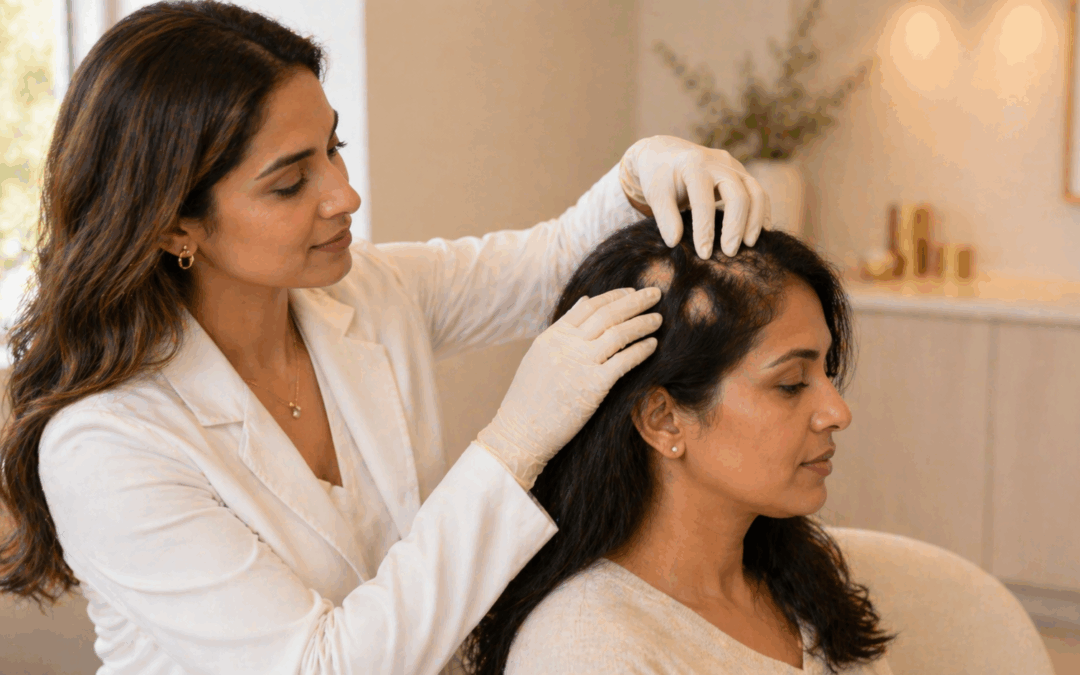
Alopecia areata is an autoimmune condition in which the body’s immune system mistakenly attacks healthy hair follicles. This causes sudden, often unexpected hair loss that typically appears as round or oval patches on the scalp.
How common is it?
Alopecia areata has a lifetime incidence of approximately 2% globally, affecting people of all ages, genders and ethnicities. Children make up around 20% of cases, while 60% of adults report their first patches before the age of 30. A UK population study of 4.16 million people found that new onset alopecia areata peaks between the ages of 25 and 29.
What causes it?
The exact cause remains unclear, but research has identified alopecia areata as a T cell mediated autoimmune disease that targets hair follicles. Several factors may trigger or contribute to the condition:
- Genetic predisposition (family history increases risk)
- Stress or emotional trauma
- Viral infections
- Other autoimmune conditions such as thyroid disease, vitiligo or atopy
- Environmental triggers
What does it look like?
Alopecia areata manifests in several forms:
- Patchy alopecia areata: One or more coin sized, smooth bald patches on the scalp or other body areas. This is the most common presentation.
- Alopecia totalis: Complete loss of all hair on the scalp.
- Alopecia universalis: Complete loss of hair across the entire body, including eyebrows, eyelashes and body hair.
The course of the disease is highly unpredictable. Some people experience a single episode with full regrowth, while others have recurring patches or progression to more extensive forms.
Treatment options
Traditional treatments for alopecia areata include topical, intralesional and oral corticosteroids, minoxidil, and immunotherapy. However, incomplete remission and relapses are common with these approaches.
Recent advances have brought JAK inhibitors (such as baricitinib) to the forefront, offering meaningful long term hair regrowth for adults with severe forms of the condition. The approval of these targeted therapies has opened a new era for alopecia areata management.
Can PRP help with alopecia areata?
It is important to understand that PRP is not a cure for alopecia areata. Because alopecia areata is an autoimmune condition where the body’s immune system attacks hair follicles, it requires a fundamentally different treatment approach than androgenetic alopecia (pattern baldness).
The mainstay treatments for alopecia areata remain corticosteroids (topical, intralesional or oral), immunotherapy, and newer JAK inhibitors such as baricitinib. These treatments directly target the immune dysfunction driving the condition.
At Hair Loss Studios, we do not position PRP as a primary treatment for alopecia areata. If you have this condition, we recommend consulting a dermatologist or trichologist who can assess whether immunomodulatory treatments are appropriate. For patients who prefer to explore non steroidal options or wish to use PRP alongside conventional treatment, we can discuss whether it might play a supportive role in your individual case. However, we are always honest that expectations should be realistic and that PRP cannot address the underlying autoimmune cause.
2. Androgenetic Alopecia (Pattern Hair Loss)
Androgenetic alopecia, commonly known as male or female pattern baldness, is the most prevalent form of hair loss worldwide. It is a hereditary condition driven by hormones, specifically dihydrotestosterone (DHT), which causes gradual miniaturisation of hair follicles over time.
How common is it?
Androgenetic alopecia is remarkably common. Up to 80% of men and 50% of women will experience pattern hair loss at some point in their lives. The condition affects approximately 85% of men by age 50 and 40% of women by the same age.
In the UK specifically, approximately 8 million women are affected by female pattern hair loss. For men, around 40% experience significant hair loss by age 35, with prevalence increasing to approximately 65% by age 60.
What causes it?
The primary driver is DHT, a hormone derived from testosterone via the enzyme 5 alpha reductase. In genetically susceptible individuals, DHT binds to receptors in hair follicles and triggers a process called miniaturisation. This gradually shrinks the follicles, producing progressively thinner, shorter and weaker hairs until the follicle eventually stops producing visible hair altogether.
Key contributing factors include:
- Genetics (the androgen receptor gene on the X chromosome shows strong associations with male pattern baldness)
- Hormonal changes (menopause in women, for example)
- Age
- Lifestyle factors such as smoking, stress and nutritional deficiencies
What does it look like?
In men, androgenetic alopecia typically begins with recession at the temples or thinning at the crown, following the well known Norwood scale pattern. It can start as early as the late teens or early twenties.
In women, the pattern differs. Hair usually thins diffusely across the top of the scalp while the frontal hairline remains relatively intact. This follows the Ludwig scale classification. Female pattern hair loss is particularly common after menopause, when declining oestrogen levels may allow DHT to exert greater influence.
Treatment options
The only FDA approved medications for androgenetic alopecia are minoxidil (topical) and finasteride (oral, for men only). Both can slow progression and, in some cases, stimulate regrowth. However, results vary and long term use is required to maintain benefits.
PRP for androgenetic alopecia
PRP has become an increasingly popular treatment for pattern hair loss, supported by a growing body of clinical evidence. A 2023 meta analysis of 10 randomised controlled trials involving 555 treatment units found that PRP significantly increased hair density compared to control groups.
An earlier meta analysis similarly found that PRP injections increased hair density by an average of 25.6 hairs per square centimetre compared to placebo.
Research also shows high patient satisfaction with PRP treatment. One study reported a mean satisfaction score of 4.23 out of 5 among patients treated with PRP for androgenetic alopecia.
At Hair Loss Studios, PRP is one of our core treatments for androgenetic alopecia. By injecting concentrated platelets and growth factors directly into the scalp, PRP stimulates follicle activity, prolongs the growth phase of the hair cycle, and creates a healthier environment for regrowth. Many clients use PRP alongside other treatments such as LED therapy or mesotherapy for enhanced results.
3. Traction Alopecia
Traction alopecia is a form of hair loss caused by repeated pulling or tension on the hair over time. Unlike alopecia areata or androgenetic alopecia, it is not driven by autoimmune or hormonal factors but rather by mechanical stress on the hair follicles.
Who is affected?
Traction alopecia is most commonly seen in individuals who wear tight hairstyles regularly, including tight ponytails, braids, cornrows, weaves, extensions or hair buns. In the UK, it is particularly prevalent among Black women, where societal pressure to alter natural hair texture, use of chemical relaxers, and certain traditional styling practices contribute to the condition.
However, traction alopecia can affect anyone who subjects their hair to prolonged tension, including dancers, athletes who wear tight headgear, and individuals who habitually pull their hair.
What causes it?
The constant pulling creates sustained stress on hair follicles, particularly around the hairline and temples. Over time, this leads to:
- Inflammation around the follicle
- Gradual weakening of the hair root
- Follicular damage and eventual scarring
If caught early, traction alopecia is often reversible. However, prolonged tension can cause permanent scarring (cicatricial alopecia), at which point the follicles are destroyed and regrowth becomes impossible.
What does it look like?
Traction alopecia typically presents as:
- Thinning or recession around the hairline, particularly at the temples and edges
- Small bumps or pustules on the scalp (early stages)
- Broken hairs of varying lengths along the affected areas
- In advanced cases, smooth, shiny patches where follicles have been permanently damaged
The pattern often mirrors the areas of greatest tension from the hairstyle being worn.
Treatment options
The most important step is eliminating the source of tension. This means:
- Avoiding tight hairstyles or alternating with looser styles
- Reducing or eliminating the use of chemical relaxers
- Allowing the hair to rest without extensions, weaves or braids for extended periods
- Using gentle, protective styling techniques
Medical treatments may include topical minoxidil to stimulate regrowth in areas where follicles remain viable, anti inflammatory medications if there is active inflammation, and corticosteroid injections for more severe cases.
Can PRP help with traction alopecia?
For traction alopecia that has not progressed to scarring, PRP may support the recovery process by delivering growth factors directly to weakened follicles. PRP’s ability to stimulate cell proliferation and promote healing makes it a logical adjunct treatment when combined with lifestyle changes.
However, it is important to note that if significant scarring has occurred, PRP cannot restore permanently destroyed follicles. In such cases, hair transplantation may be the only option for restoring hair to affected areas.
At Hair Loss Studios, we assess each case individually to determine whether PRP or other treatments are appropriate based on the extent of follicular damage.
How PRP Works for Hair Loss
Platelet rich plasma therapy involves drawing a small sample of your blood, processing it to concentrate the platelets and growth factors, and then injecting this preparation directly into the scalp.
Platelets contain numerous growth factors that play important roles in tissue regeneration, including:
- Platelet derived growth factor (PDGF): Stimulates cell growth and blood vessel formation
- Vascular endothelial growth factor (VEGF): Promotes blood supply to follicles
- Transforming growth factor (TGF): Regulates cell proliferation
- Epidermal growth factor (EGF): Supports cellular renewal
These growth factors are proposed to act on stem cells in the bulge area of hair follicles, stimulating the development of new follicles and promoting neovascularisation (new blood vessel formation).
A 2025 systematic review of 43 randomised controlled trials involving 1,877 participants concluded that moderate evidence supports PRP as safe and effective in improving hair density, reducing hair loss, and enhancing clinical outcomes and patient satisfaction for androgenetic alopecia.
PRP Treatment at Hair Loss Studios
At Hair Loss Studios in Bromley, we offer PRP therapy as part of a comprehensive approach to hair restoration. Our treatment protocol typically involves:
- An initial course of sessions (usually 3 to 4 treatments spaced 4 weeks apart)
- Maintenance sessions every 3 to 6 months to sustain results
- Combination with complementary treatments such as LED therapy, mesotherapy or nutritional support where appropriate
PRP is most effective for androgenetic alopecia (pattern hair loss) and early stage traction alopecia where follicles remain viable. For alopecia areata, PRP is not a primary treatment and cannot cure the underlying autoimmune condition. Patients with alopecia areata should first consult a dermatologist to explore immunomodulatory treatments. We can discuss whether PRP might offer supportive benefits in individual cases, but we are always transparent about its limitations.
During your free consultation, we will assess your specific type of hair loss, discuss realistic expectations based on the evidence, and recommend a personalised treatment plan.
Check our PRP prices at Hair Loss Studios
When to Seek Professional Help
You should consider consulting a hair loss specialist if you notice:
- Sudden or patchy hair loss
- Gradual thinning that is progressing over time
- Receding hairline or widening parting
- Increased shedding (more than 100 hairs per day consistently)
- Hair loss accompanied by scalp symptoms such as itching, redness or scaling
- Hair loss following a stressful event, illness or medication change
Early intervention often leads to better outcomes. Many forms of alopecia respond more effectively to treatment when addressed before significant follicular damage has occurred.
FAQs
Is alopecia the same as normal hair loss?
Alopecia is the clinical term for hair loss, but it encompasses specific conditions with distinct causes. Normal shedding (50 to 100 hairs per day) is part of the natural hair cycle. Alopecia refers to excessive or abnormal hair loss that goes beyond this normal range.
Can alopecia be cured?
This depends on the type. Traction alopecia can often be reversed if caught early by eliminating the source of tension. Alopecia areata may resolve spontaneously in some cases, though recurrence is common. Androgenetic alopecia is a progressive condition that can be managed but not cured; treatment aims to slow progression and stimulate regrowth.
Is PRP painful?
Most patients describe PRP as mildly uncomfortable rather than painful. We use fine needles and can apply topical numbing cream beforehand to minimise discomfort. Any redness or tenderness typically resolves within 24 to 48 hours.
Can I have PRP if I have alopecia areata?
PRP is not a cure for alopecia areata and should not be considered a primary treatment. Alopecia areata is an autoimmune condition that typically requires immunomodulatory treatments such as corticosteroids or JAK inhibitors, which should be discussed with a dermatologist. Some research suggests PRP may offer modest supportive benefits for mild, patchy alopecia areata, but evidence quality is low and results are inconsistent. For severe forms such as alopecia totalis or universalis, PRP is unlikely to be effective. We assess each case individually and are always honest about what PRP can and cannot achieve.
Will my hair loss come back after PRP?
PRP does not permanently alter the underlying causes of hair loss, so maintenance treatments are typically recommended to sustain results. For androgenetic alopecia, ongoing management is usually necessary. For alopecia areata, PRP cannot prevent new patches or relapses because it does not address the autoimmune cause. Patients with alopecia areata should work with a dermatologist to manage their condition, as recurrence is common regardless of treatment type.
Sources
- Aventus Clinic. “Hair Loss in the UK: A Statistical Deep Dive.” 2025. https://aventusclinic.com/hair-loss-in-the-uk-stats/
- Cureus. “Alopecia Areata: Understanding the Pathophysiology and Advancements in Treatment Modalities.” 2025. https://www.ncbi.nlm.nih.gov/pmc/articles/PMC11872173/
- Kim SY et al. “Alopecia areata: from immunopathogenesis to emerging therapeutic approaches.” Frontiers in Immunology, 2025. https://www.ncbi.nlm.nih.gov/pmc/articles/PMC12634633/
- Harries M et al. “The epidemiology of alopecia areata: a population based cohort study in UK primary care.” British Journal of Dermatology, 2022. https://pmc.ncbi.nlm.nih.gov/articles/PMC9298423/
- Piraccini BM. “A new era for alopecia areata: New treatments and improved knowledge of the condition.” Journal of the European Academy of Dermatology and Venereology, 2024. https://onlinelibrary.wiley.com/doi/10.1111/jdv.19741
- Georgescu SR et al. “Platelet Rich Plasma and Its Use in Hair Regrowth: A Review.” International Journal of Molecular Sciences, 2022. https://pmc.ncbi.nlm.nih.gov/articles/PMC8922312/
- Gkini MA et al. “The Effect of Platelet Rich Plasma in Hair Regrowth: A Randomized Placebo Controlled Trial.” Plastic and Reconstructive Surgery Global Open, 2015. https://pmc.ncbi.nlm.nih.gov/articles/PMC4622412/
- Cruciani S et al. “Platelet rich plasma for the treatment of alopecia: a systematic review and meta analysis.” Journal of Dermatological Treatment, 2022. https://pubmed.ncbi.nlm.nih.gov/34967722/
- Ntshingila S et al. “Platelet Rich Plasma in the Management of Alopecia: A Systematic Review and Meta Analysis of Clinical Evidence.” Dermatology and Therapy, 2025. https://pubmed.ncbi.nlm.nih.gov/40944844/
- Chen X et al. “Effectiveness of Platelet Rich Plasma in the Treatment of Androgenic Alopecia: A Meta Analysis.” Aesthetic Plastic Surgery, 2023. https://link.springer.com/article/10.1007/s00266-023-03603-9
- Mysore V et al. “Treatment of Androgenetic Alopecia Using PRP to Target Dysregulated Mechanisms and Pathways.” Frontiers in Medicine, 2022. https://www.frontiersin.org/journals/medicine/articles/10.3389/fmed.2022.843127/full
- Chemist4U. “Hair Loss Statistics 2025.” 2026. https://www.chemist-4-u.com/guides/hair/hair-loss-statistics/
- Urysiak-Czubatka I et al. “Comorbidities in Androgenetic Alopecia: A Comprehensive Review.” Dermatology and Therapy, 2022. https://link.springer.com/article/10.1007/s13555-022-00799-7
- Alopecia UK. “Understanding Androgenetic Alopecia.” https://www.alopecia.org.uk/androgenetic-alopecia-pattern-hair-loss
- Cho YH et al. “Platelet rich plasma in alopecia areata and primary cicatricial alopecias: A systematic review.” Frontiers in Medicine, 2022. https://www.frontiersin.org/journals/medicine/articles/10.3389/fmed.2022.1058431/full
- Kaushik A et al. “Platelet Rich Plasma in Alopecia areata: A Case Report With a Mini Review of Literature.” Cureus, 2023. https://pmc.ncbi.nlm.nih.gov/articles/PMC10248741/
Medical Disclaimer
This article is for informational purposes only and does not constitute medical advice. Alopecia can have multiple underlying causes, and the effectiveness of any treatment varies between individuals. Alopecia areata is an autoimmune condition that requires assessment and treatment by a qualified dermatologist or trichologist; PRP is not a cure for this condition. If you are experiencing hair loss, we recommend consulting a qualified healthcare professional for proper diagnosis and personalised treatment recommendations. Hair Loss Studios offers professional hair restoration treatments; readers should be aware of this commercial relationship when considering the information provided.