
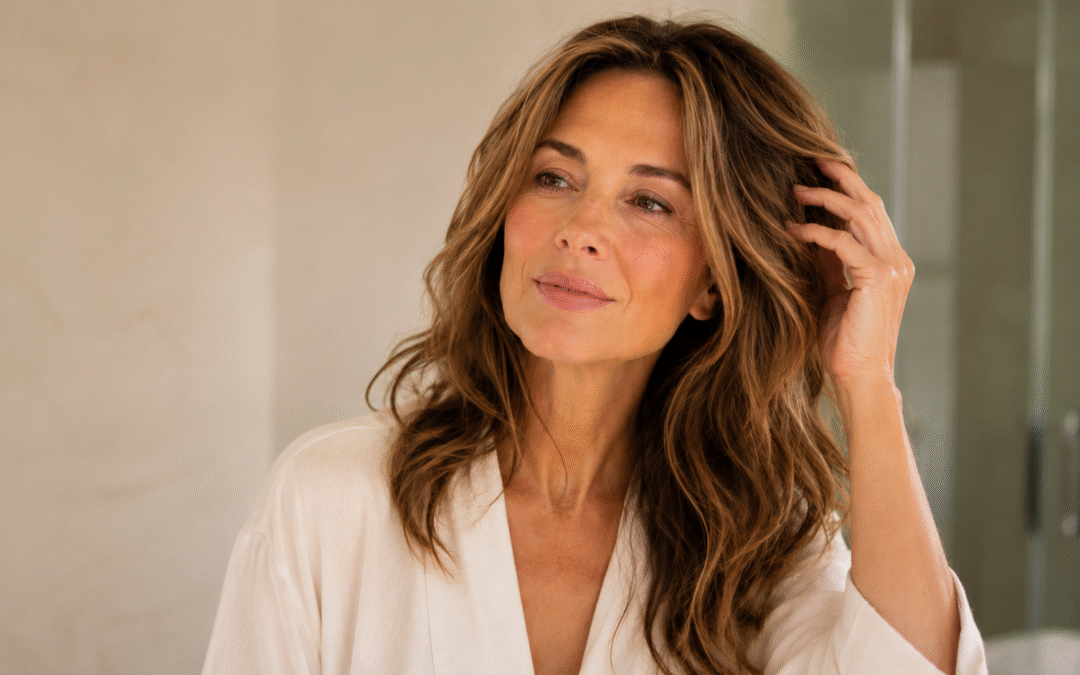
Menopause brings a lot of changes. Hot flushes, mood swings, sleep troubles. But one symptom that catches many women off guard is hair loss.
You might notice your ponytail feels thinner, your parting looks wider, or more hair than usual is gathering in your brush. It can be distressing, especially when you were not expecting it.
The good news is that menopausal hair loss is common, it is understood, and there are things that can help. Let us look at why it happens and what you can do about it.
How Common Is Hair Loss During Menopause?
More common than most people realise.
Around half of women going through menopause experience some degree of hair thinning. By the time women reach postmenopause, that figure rises to roughly 80%.
So if your hair is changing, you are far from alone. It is one of the most frequently reported symptoms of this life stage, even if it does not get talked about as much as hot flushes or night sweats.
Why Does Menopause Affect Your Hair?
The short answer: hormones.
Throughout your life, your hormones play a big role in how your hair grows. During menopause, those hormone levels shift significantly, and your hair responds.
Oestrogen and progesterone decline
These two hormones have a protective effect on your hair. Oestrogen helps keep hair in the growing phase for longer, which is why many women notice thicker, fuller hair during pregnancy when oestrogen levels surge.
When oestrogen drops during menopause (by as much as 80 to 90 percent), hair spends less time growing and more time resting. Individual strands become finer, and overall density decreases.
Progesterone also plays a role. It helps block the conversion of testosterone into DHT (dihydrotestosterone), the hormone that causes follicles to shrink. When progesterone falls, this protective effect weakens.
Relative increase in androgens
Women have always had small amounts of androgens (sometimes called “male hormones”) like testosterone. They do not necessarily increase during menopause, but as oestrogen and progesterone drop, androgens become proportionally more dominant.
This shift can trigger a type of hair loss similar to female pattern hair loss, where hair thins gradually, particularly at the crown and parting.
Reduced blood flow to follicles
Oestrogen also supports healthy blood vessels. When it declines, blood flow to the scalp can decrease, meaning follicles receive fewer nutrients and less oxygen. This can contribute to slower growth and weaker hair.
What Does Menopausal Hair Loss Look Like?
Unlike male pattern baldness, which often creates a receding hairline or bald patch, menopausal hair loss is usually more diffuse.
You might notice:
- A wider parting
- Your ponytail feeling thinner
- More scalp visible, particularly at the crown
- Hair that seems finer or less voluminous overall
- More hair in your brush, on your pillow, or in the shower drain
- Hair that feels drier, more brittle, or breaks more easily
Some women also notice changes in hair texture. Hair may become wavier or straighter than before, or feel coarser and less manageable.
On the other hand, some women notice increased facial hair during menopause. This is the androgens at work, stimulating hair growth in different areas while reducing it on the scalp.
When Does It Start?
Hair changes can begin during perimenopause (the years leading up to your last period), which typically starts in your mid-40s but can begin earlier.
For some women, the changes are gradual and barely noticeable. For others, thinning seems to happen quite suddenly. Everyone’s experience is different.
The transition typically lasts several years, and hair changes may continue into postmenopause before stabilising.
Is It Permanent?
This is what most women want to know.
The truth is that menopausal hair loss is often ongoing rather than temporary, because the hormonal changes that cause it are permanent. Unlike stress-related shedding, where hair typically recovers once the trigger passes, menopausal changes persist.
However, that does not mean nothing can be done. Many women find that with the right support, they can slow the thinning, improve the quality of their remaining hair, and maintain a fuller appearance.
The earlier you address it, the more you have to work with.
What Can Actually Help?
There are several approaches that can make a real difference.
Hormone Replacement Therapy (HRT)
Since declining hormones are the root cause, replacing them can help.
HRT supplements oestrogen (and progesterone if you have a uterus) to ease menopausal symptoms. For some women, this includes improvements in hair thickness and quality.
HRT is not right for everyone, and the decision should be made with your GP or menopause specialist based on your individual health profile. But if you are considering HRT for other symptoms like hot flushes or mood changes, it is worth knowing that your hair may benefit too.
One note of caution: some synthetic progestogens used in older HRT formulations can have androgenic effects that might worsen hair loss. If you are concerned, ask about body-identical or micronised progesterone, which tends to be more hair-friendly.
PRP Therapy
PRP (platelet-rich plasma) is a treatment that uses your own blood to stimulate hair follicles and create a healthier scalp environment.
During menopause, when blood flow to the scalp may be reduced and follicles are weakening, PRP can help by:
- Delivering concentrated growth factors directly to your follicles
- Improving circulation to the scalp
- Reducing inflammation
- Supporting follicles to produce thicker, stronger hair
PRP does not replace hormones, but it works alongside whatever else you are doing to give your hair the best chance. Many of our clients going through menopause find it makes a noticeable difference.
If you are wondering whether PRP might help your situation, a consultation can give you a clearer picture of what to expect.
Address Nutritional Gaps
Menopause can affect how your body absorbs and uses certain nutrients. At the same time, your hair needs a steady supply of protein, iron, zinc, vitamin D, and B vitamins to grow well.
Low iron is particularly common in women and can worsen hair thinning. Blood testing can identify any deficiencies that might be contributing to your hair loss.
If gaps are found, targeted supplementation or dietary changes can support better hair health.
Topical Treatments
Minoxidil is an over-the-counter treatment that can help by extending the growth phase of hair and improving blood flow to follicles. It is available in 2% or 5% strength and is applied directly to the scalp.
Minoxidil works for many women, though results vary and it requires consistent daily use. It can be used alongside other treatments like PRP.
Reduce Stress
Menopause itself can be stressful, and stress can make hair loss worse by pushing more follicles into the resting phase.
Finding ways to manage stress, whether through exercise, meditation, better sleep, or simply making time for yourself, supports both your overall wellbeing and your hair.
Look After Your Scalp
A healthy scalp provides the best environment for hair growth. During menopause, some women notice their scalp becomes drier or more sensitive.
Gentle, sulphate-free shampoos, regular (but not excessive) washing, and avoiding harsh chemical treatments can all help keep your scalp in good condition.
What About Supplements?
You will find countless supplements marketed for hair health during menopause. Some contain ingredients like biotin, collagen, or herbal extracts.
The honest truth is that supplements are most helpful when they address a genuine deficiency. Taking biotin when you already have enough, for example, is unlikely to make a difference.
Before spending money on supplements, consider having your levels tested. That way, you can focus on what your body actually needs.
Small Changes That Help
Beyond specific treatments, some everyday habits can support your hair:
Be gentle
Hair may be more fragile during menopause. Avoid tight hairstyles, excessive heat styling, and harsh chemical treatments that put extra stress on already-vulnerable hair.
Protect from sun damage
Your scalp can burn, especially where hair is thinning. Wear a hat or use scalp-safe sun protection when outdoors.
Eat well
Protein is essential for hair growth. Make sure you are getting enough from eggs, fish, lean meat, legumes, or other sources. Include iron-rich foods, healthy fats, and plenty of vegetables.
Stay hydrated
Dehydration affects your skin and scalp, which in turn affects your hair. Drink enough water throughout the day.
Exercise regularly
Physical activity improves circulation, reduces stress, and supports overall health, all of which benefit your hair.
When to Seek Help
Consider professional advice if:
- Your hair thinning is significant or progressing quickly
- You are noticing patches of hair loss rather than general thinning
- You have other symptoms like scalp itching, redness, or tenderness
- You are not sure whether menopause is the cause
- You want to be proactive about maintaining your hair
Hair loss during menopause is common, but that does not mean you have to simply accept it. Understanding what is happening and taking action early gives you the best chance of maintaining fuller, healthier hair.
The Bottom Line
Menopause changes a lot of things, including your hair. Declining oestrogen and progesterone, combined with a relative increase in androgens, can lead to thinner, finer hair that sheds more easily.
While you cannot stop the hormonal changes, you can support your hair through this transition. Whether that means HRT, PRP, addressing nutritional gaps, or simply being gentler with your hair, there are real options that can help.
You do not have to just watch and wait. Taking action gives you more control over how your hair looks and feels during this chapter of your life.
FAQs
Is hair loss a normal part of menopause?
Yes. Around half of women experience some degree of hair thinning during menopause, and this rises to about 80% in postmenopausal women. It is caused by hormonal changes, particularly the decline in oestrogen and progesterone.
Will my hair grow back after menopause?
Menopausal hair loss is usually ongoing rather than temporary, because the hormonal changes are permanent. However, with the right support, many women can slow thinning, improve hair quality, and maintain better density than they would without treatment.
Does HRT help with hair loss?
For some women, yes. By supplementing oestrogen and progesterone, HRT can help restore some of the hormonal balance that supports hair growth. Not all HRT formulations are equal for hair, so discuss your options with your GP or menopause specialist.
Can PRP help menopausal hair loss?
Yes. PRP delivers growth factors directly to your scalp, improving circulation and supporting follicle health. It can be particularly helpful during menopause when blood flow to the scalp may be reduced. Many of our clients find it makes a noticeable difference.
Why is my hair so dry during menopause?
Oestrogen helps maintain moisture in your skin and scalp. When levels drop, your scalp may produce less oil, leading to drier hair that feels more brittle. Using gentle, moisturising hair products can help.
At what age does menopausal hair loss start?
Hair changes can begin during perimenopause, which typically starts in the mid-40s but can begin earlier for some women. The timing varies from person to person.
Is menopausal hair loss the same as female pattern hair loss?
They are related. The hormonal changes during menopause can trigger or worsen female pattern hair loss, which causes gradual thinning at the crown and parting. The underlying mechanism (DHT affecting susceptible follicles) is similar.
Should I get my hormones tested?
If you are experiencing hair loss alongside other menopausal symptoms, hormone testing can help confirm what is happening. It can also rule out other causes like thyroid issues. Your GP can arrange appropriate tests.
Can stress make menopausal hair loss worse?
Yes. Stress can push more follicles into the resting phase, increasing shedding on top of hormonal changes. Managing stress is an important part of supporting your hair during menopause.
Concerned About Your Hair During Menopause?
If your hair is changing and you want to understand your options, we are here to help.
At Hair Loss Studios, we see many women going through menopause who want to take action early. We can assess your hair, discuss what might be contributing to your thinning, and recommend the approach most likely to help.
No pressure, no judgement. Just honest advice from people who understand what you are going through.
Sources
- “Menopause and hair loss in women: Exploring the hormonal transition.” Maturitas (ScienceDirect), 2025.
- Healthline. “Hair Loss and Menopause: How to Prevent It.”
- British Menopause Society. “Menopause and Hair Health.”
Medical Disclaimer
This article is for informational purposes only. If you are experiencing hair loss during menopause, we recommend consulting a healthcare professional to discuss your individual situation. Treatment options like HRT should be considered with your GP or menopause specialist based on your health profile.